Indian Hill Ohio Home Market Guide: What Buyers Need to Know in 2026

The Indian Hill Ohio home market does not behave like anywhere else in Cincinnati. It never has. While broader Greater Cincinnati data tells one story, Indian Hill writes its own, and the numbers that define this village, lot sizes measured in acres, median sale prices well above $1.5M, a school district ranked among the top 100 nationally, tell a story about scarcity, prestige, and long-term value that holds across nearly every market cycle.
For buyers weighing a purchase or custom build here, 2026 brings an interesting set of conditions. More inventory across Greater Cincinnati. Shifting mortgage rates. A national sales recovery forecast by the NAR. None of that changes the fundamental calculus in Indian Hill, but understanding how the regional picture interacts with this hyper-local market is worth the time.
Why Indian Hill Commands Premium Prices
Three things drive Indian Hill home values above everything else in the Cincinnati metro: land scarcity, zoning intent, and reputation.
The village was incorporated specifically to preserve its character. Lots average 3 to 5 acres, and zoning protections have kept dense development at bay for decades. That is not an accident. It is a deliberate policy posture that has compounded in value over time, because acreage this close to a major city does not come back once it is gone.
The equestrian culture here is real, not ornamental. Private barns, riding trails, and working farms like Turner Farm (operating since the 1800s) give Indian Hill a texture that money alone cannot replicate in a newer suburb. Buyers arriving from New York, Chicago, or Los Angeles, who account for a measurable share of inbound migration to the area, recognize it immediately.
Reputation matters too. Indian Hill is known regionally as Cincinnati's most prestigious address. That kind of recognition does not erode quickly, and it tends to create a self-reinforcing demand floor.
Indian Hill Home Prices in 2026: What the Data Shows
The numbers are striking. In February 2026, the median sale price in Indian Hill reached $1.7M, according to Redfin. Price per square foot came in at $383, up 8.0% year over year. Active luxury listings currently sit at around 10 properties, with a median asking price of $2.52M.
Does that median dip from prior peaks signal weakness? Not really. The active inventory in Indian Hill is thin enough that a single large estate closing in one period can shift the median by hundreds of thousands of dollars in either direction. One month's data tells you the range. It does not tell you the trend.
The broader Cincinnati context helps frame it. Greater Cincinnati's median sold price hit $300,000 in January 2026, up 10% from the same month in 2025, according to the REALTOR Alliance of Greater Cincinnati. Regional active inventory climbed 32.1% year over year, which is giving buyers more options and more negotiating room across most of the market. Indian Hill inventory did not climb proportionally. That gap between regional supply growth and Indian Hill supply levels is precisely why the premium persists.
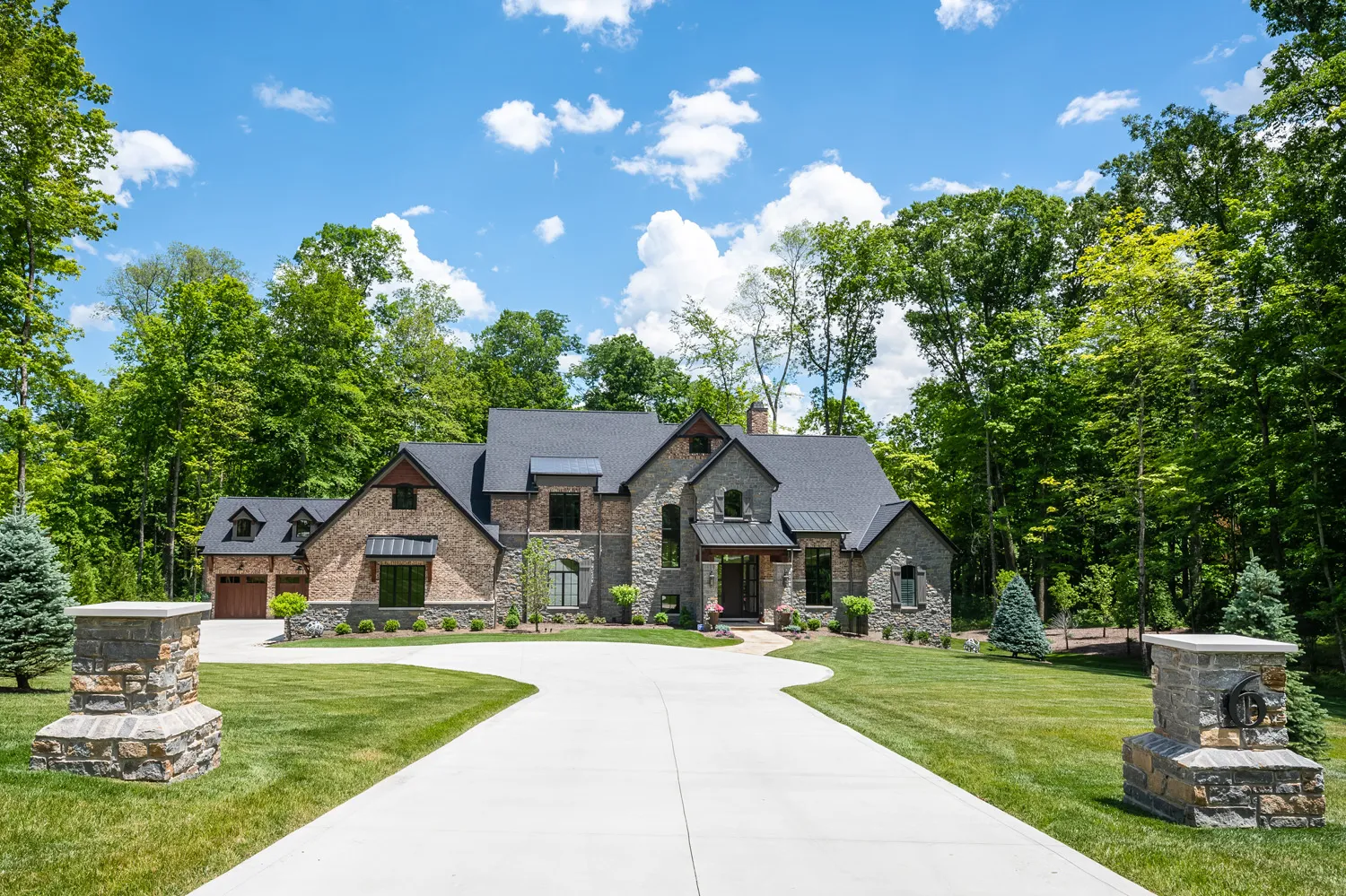
At the high end, current listings range from just under $1M to nearly $6M. The spread reflects what Indian Hill actually contains: a mix of updated mid-century estates, new custom builds on wooded lots, and multi-generational properties that rarely change hands.
Lot Sizes, Zoning, and What That Means for Custom Builds
Three to five acres is the general rule in Indian Hill, but the variation within that range matters more than people expect.
A flat 3-acre lot and a 5-acre lot with a dramatic grade change, mature hardwoods, and a creek running through the back half are not the same construction challenge. Site preparation on the harder lots can run significantly more than buyers anticipate, and the most visually stunning properties are often the ones that require the most work before a foundation goes in.
For a true luxury custom build in Greater Cincinnati, construction costs run $400 to $600 or more per square foot, according to Daley Design + Build. A 5,000-square-foot home at the midpoint of that range puts the construction budget alone at $2.5M, before land, site prep, or finishes. Buyers new to Indian Hill often anchor on those per-square-foot numbers without fully pricing in the land piece, which in this village adds substantially to the project total.
That is not a reason to walk away. It is a reason to enter the process with a builder who knows this specific terrain.
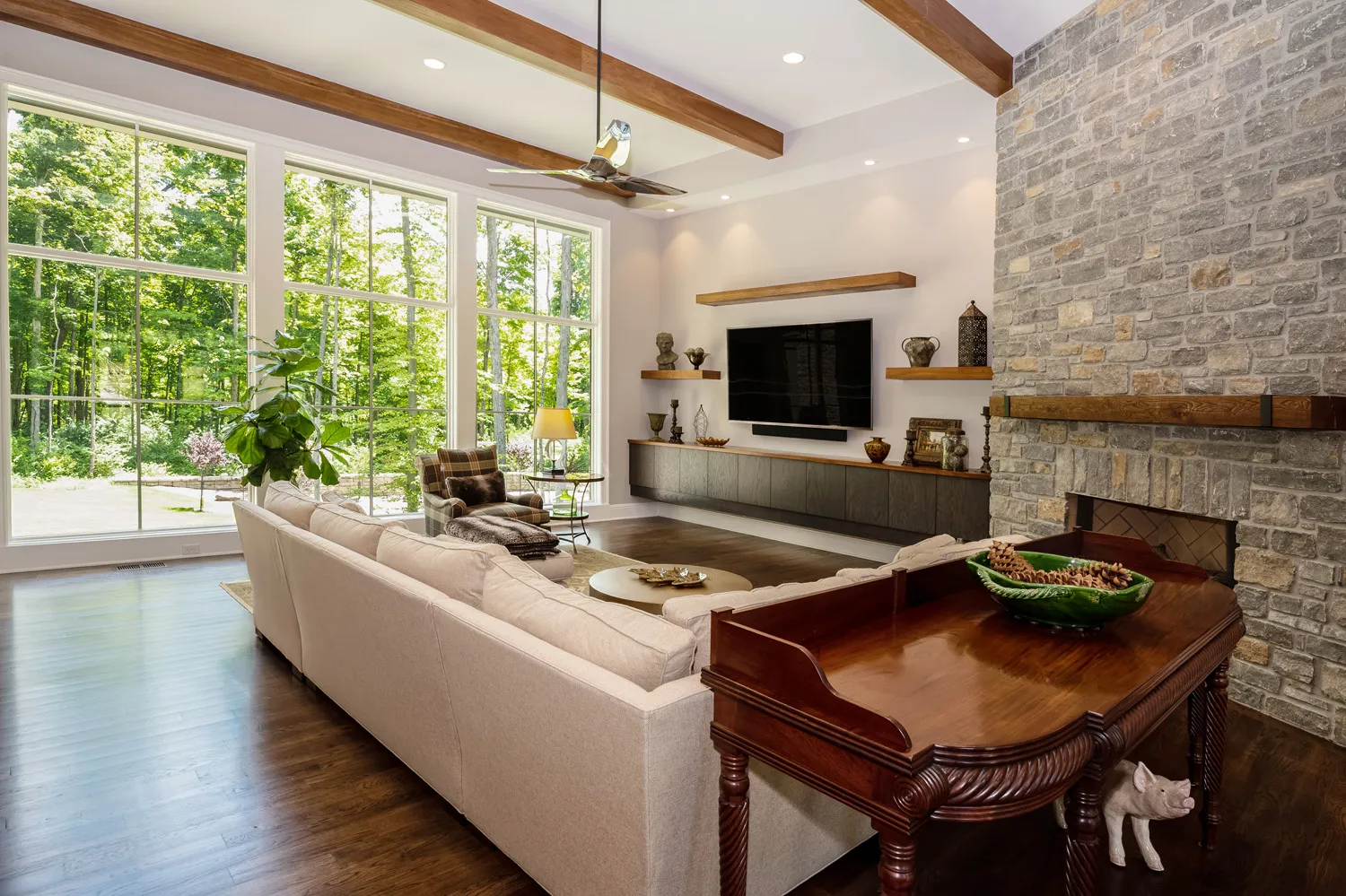
Classic Living Homes has built multiple custom homes across Indian Hill's neighborhoods, including Meadows of Peterloon and Forest Creek, and the team knows lot selection here as well as anyone in the market. The company's Indian Hill community page lays out the specifics directly: lot selection through move-in, top-tier subcontractor relationships, and deep familiarity with what each corner of the village requires.
Indian Hill Schools: A Consistent Draw for Families
The Indian Hill Exempted Village School District is the top institutional draw for family buyers, and it has been for a long time. Indian Hill High School has been named one of the top 100 high schools in the country by both Newsweek and U.S. News. The Class of 2025 ACT composite score came in seven points above the national average, according to the district's own published results.
All four schools in the district, Primary, Elementary, Middle, and High School, have carried "Excellent" ratings from the Ohio Department of Education. District-wide enrollment runs around 1,900 students, which keeps class sizes manageable and gives the schools a tight community feel that larger suburban districts rarely achieve.
For buyers with children, this is often the deciding factor. The school district covers a defined geographic area, and the custom home decision is as much a school enrollment decision as it is a real estate one.
Private options nearby include Cincinnati Country Day School and Seven Hills School, both well-regarded independent programs in the Greater Cincinnati area.
What to Expect When Building Custom in Indian Hill
A few things about building custom in Indian Hill differ from the rest of the Cincinnati market, and none of them are minor.
The permitting environment is specific to the village. Indian Hill has its own zoning rules, setback requirements, and design considerations that differ from unincorporated Hamilton County. Builders without direct experience here tend to discover those differences the hard way, usually during permit review.
Subcontractor access matters more than usual. The best trade partners, the ones who handle copper roofing, custom millwork, and steel casements, book out. A builder with existing relationships in this market gets on calendars that are closed to newcomers.
What distinguishes successful Indian Hill custom builds:
- Lot vetting before contract. Grade changes, protected trees, creek setbacks, and soil conditions all affect budget. Walk every lot with someone who has built here before.
- Realistic site prep budgeting. Some of the most appealing lots in Indian Hill have the most expensive site conditions. That number needs to be in the pro forma from day one.
- Subcontractor relationships. In a boutique market like this, access to the right trade partners is not a given. It is earned over years of project history.
- Village-specific design fluency. Indian Hill has aesthetic and structural standards baked into the approval process. A builder who has submitted plans here repeatedly understands what sails and what does not.
Classic Living Homes has navigated all of this across multiple projects in the village. For families considering their first Indian Hill build, that track record is worth more than a lower bid from a builder who is learning on the job.
Is 2026 a Good Time to Buy or Build in Indian Hill?
Nationally, the picture is more favorable than it has been in several years. The NAR is forecasting a 14% increase in existing home sales in 2026, and mortgage rates are trending toward the low 6s after sitting at 7% or higher for much of the past two years. That is a meaningful shift in monthly payment math for buyers who have been sitting on the sideline.
In Indian Hill specifically, the calculus is slightly different. Inventory is thin and unlikely to expand dramatically, because there is no mechanism for it to expand. The village is built out on a zoning-protected, low-density grid. New custom builds on existing lots are the primary path for buyers who want to own here. That constraint keeps values firm even when the broader market cools.
The 2026 Homearama, at which Classic Living Homes is an active participant, is worth watching for buyers interested in seeing current construction quality and finish standards in the Cincinnati luxury market. It is a direct window into what the best builders in the region are delivering right now.
For buyers seriously considering Indian Hill, the relevant question is not really about timing the market. It is about whether the community, the schools, the lot size, and the lifestyle fit what they are actually building toward.
Frequently Asked Questions
What is the median home price in Indian Hill, Ohio?
As of February 2026, the median sale price in the Village of Indian Hill was $1.7M, with active luxury listings carrying a median asking price around $2.52M. Price per square foot runs approximately $383, up 8% year over year. The market is thin by volume, meaning monthly figures can shift based on a handful of transactions, but the long-term price floor in Indian Hill has remained among the highest in Greater Cincinnati.
How large are lots in Indian Hill?
Lots in Indian Hill average 3 to 5 acres, significantly larger than what buyers find in surrounding suburbs. The village's zoning is specifically designed to preserve estate-scale development, which limits density and protects the rural character that defines the area. Not all lots are flat; terrain variation is common, and site preparation costs should be factored into any budget alongside land and construction figures.
Does Classic Living Homes build custom homes in Indian Hill?
Yes. Classic Living Homes has built multiple homes across Indian Hill's neighborhoods, including at Meadows of Peterloon and Forest Creek. The company offers lot selection assistance, design coordination, and full construction management with experience specific to the village's permitting requirements and terrain. Families interested in building can reach the team at 513-667-9085 or visit the Indian Hill community page for current lot availability.
Classic Living Homes builds custom homes in Indian Hill, Montgomery, Foundry Park, and select Greater Cincinnati communities. To discuss lot availability or start a custom build conversation, contact the team at 9383 Main Street, Montgomery, Ohio 45242, or call 513-667-9085.


.svg)
.svg)
.svg)